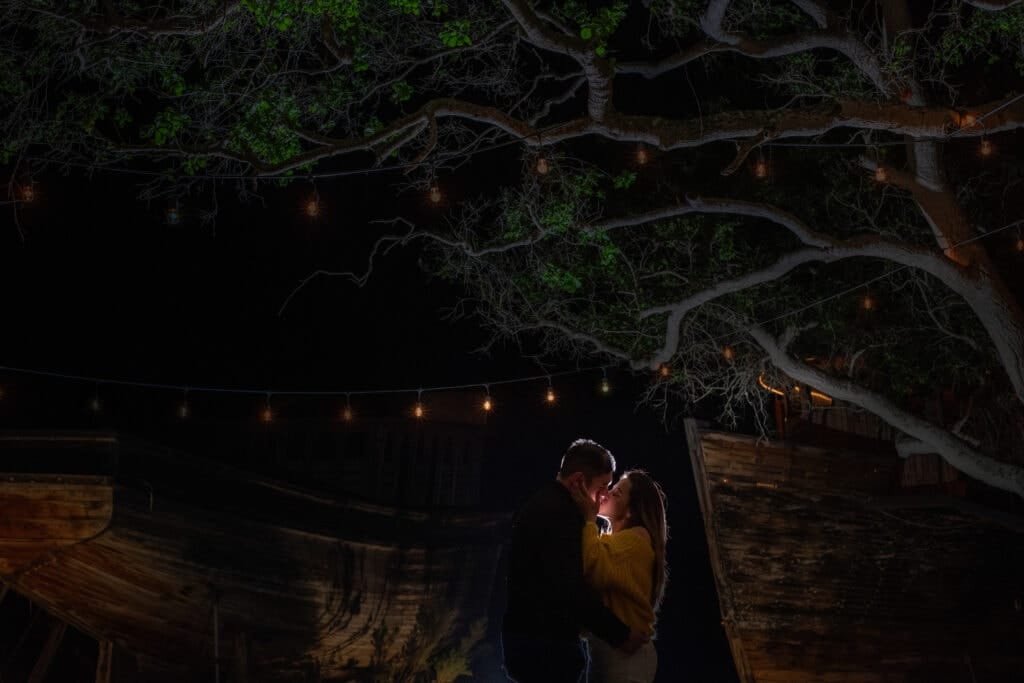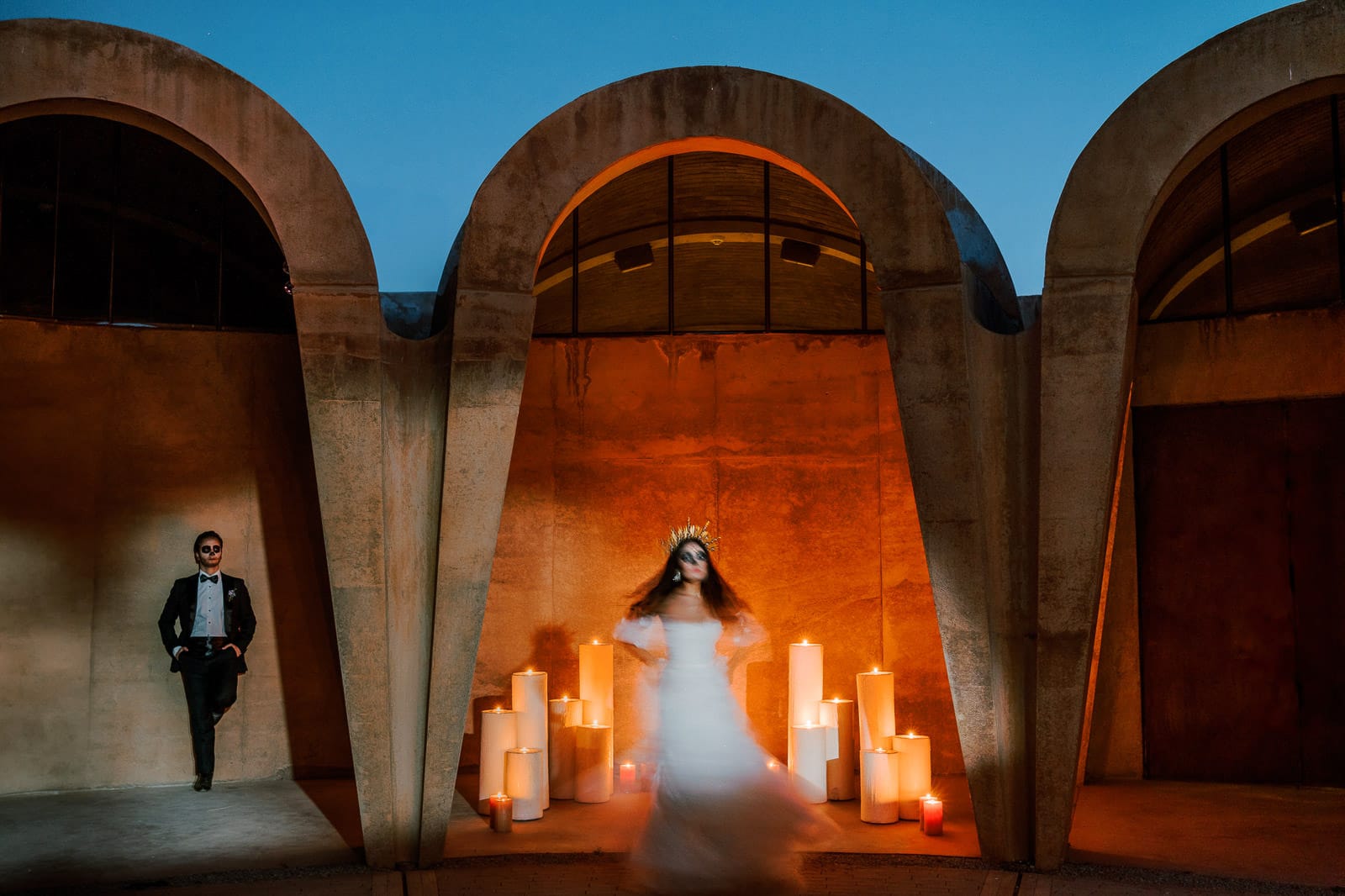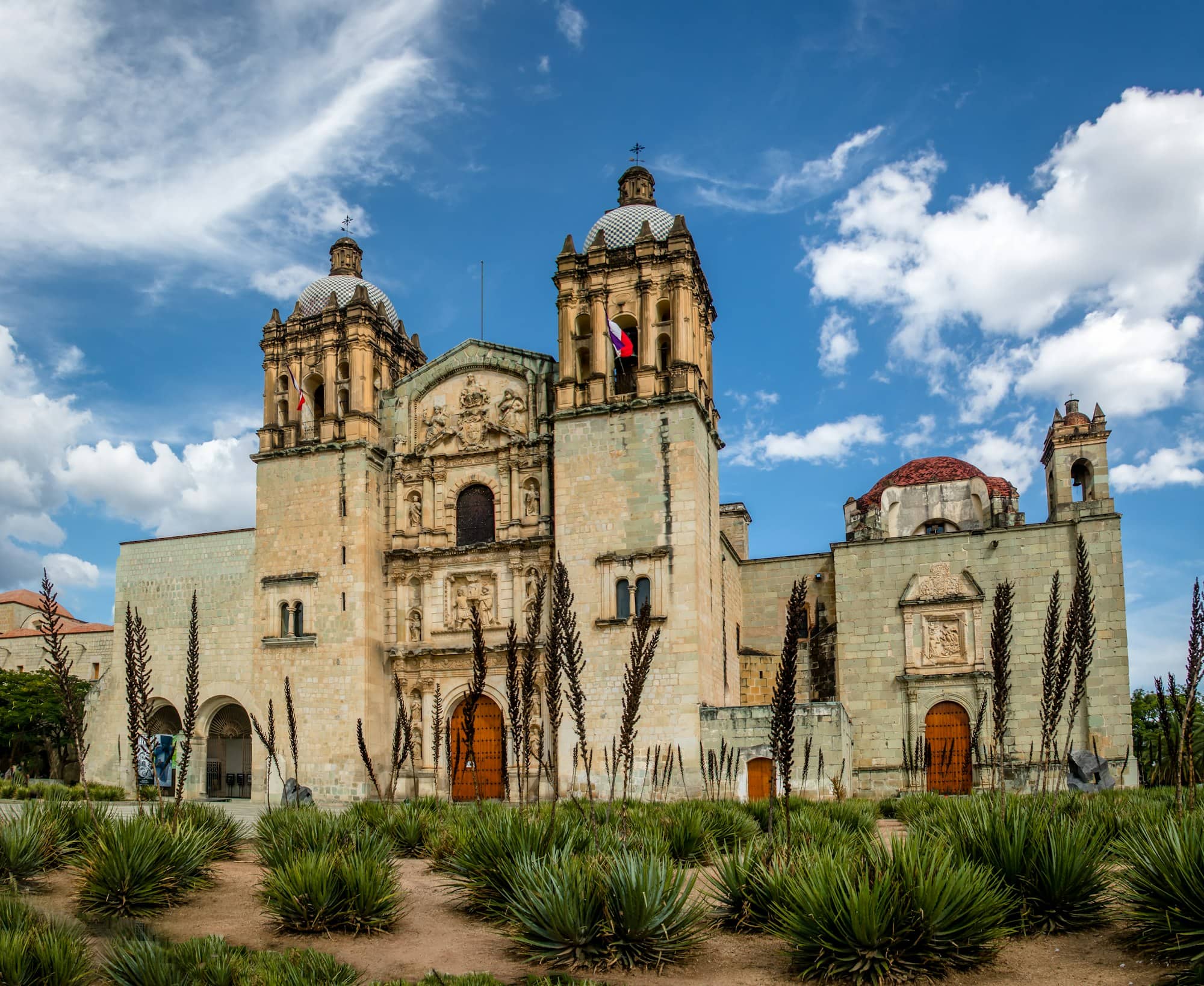
Jardín Etnobotánico de Oaxaca, alongside Santo Domingo
Jardín Etnobotánico de Oaxaca sits inside a walled enclosure adjacent to the Santo Domingo de Guzmán complex in central Oaxaca de Juárez. The garden showcases Oaxaca’s native plant species — tall agaves, cardón cacti, organ-pipe forms — laid out across an architectural courtyard that takes its cues from the colonial monastery next door.
Couples find this article through searches like “jardin etnobotanico oaxaca wedding” when they’re looking for a venue that combines colonial Oaxacan architecture with native landscape. I’m not the planner, and I don’t book the garden. What I can tell you is how the garden photographs — what the agaves do against cantera stone, where the late-afternoon light lands, which corners give the camera its strongest frames.
The orientation, briefly:
- Location. Adjacent to the Santo Domingo de Guzmán complex, central Oaxaca de Juárez.
- Character. Architectural courtyard layout, native Oaxacan plant species, cantera stone walls.
- Photographer’s read. This is one of Oaxaca’s most architecturally photogenic spaces. The geometry of the garden does half the camera’s work.
- Bookings. Verify wedding policies and dates directly with the garden — access conditions change.
What the garden gives a camera

Three things make a jardin etnobotanico oaxaca wedding photograph the way it does — and they stack on each other.
The through-line, in plain terms:
- Vertical agaves against cantera walls. Tall plants composed against warm-toned stone is the visual signature of the place. The camera doesn’t have to invent geometry — the garden supplies it.
- High-elevation Oaxacan light. Oaxaca sits at altitude, which thins the air and sharpens the sun. Late afternoon turns this from harsh to generous within a narrow window.
- Architectural courtyard layout. Hard lines, deep shadows, framed views through doorways and gateways. Plenty of compositional anchors for the photographer working a long day.
- Santo Domingo is steps away. The gold-leaf interior of the neighboring church is a different setting entirely — a contrasting backdrop if the day’s timeline includes a ceremony or visit there.
The combination is what makes the garden one of the most photogenic spaces in central Oaxaca. The photographer’s job is to time the day against the late-afternoon light, frame the couple against the agaves, and let the architecture carry weight in every frame.
How a jardin etnobotanico oaxaca wedding photographs across the day

A jardin etnobotanico oaxaca wedding doesn’t use the whole garden — couples and planners work within specific allowed areas, and policies vary. Verify exact ceremony and reception zones directly with the venue before locking the day.
The photographable rhythm, in rough order across the day:
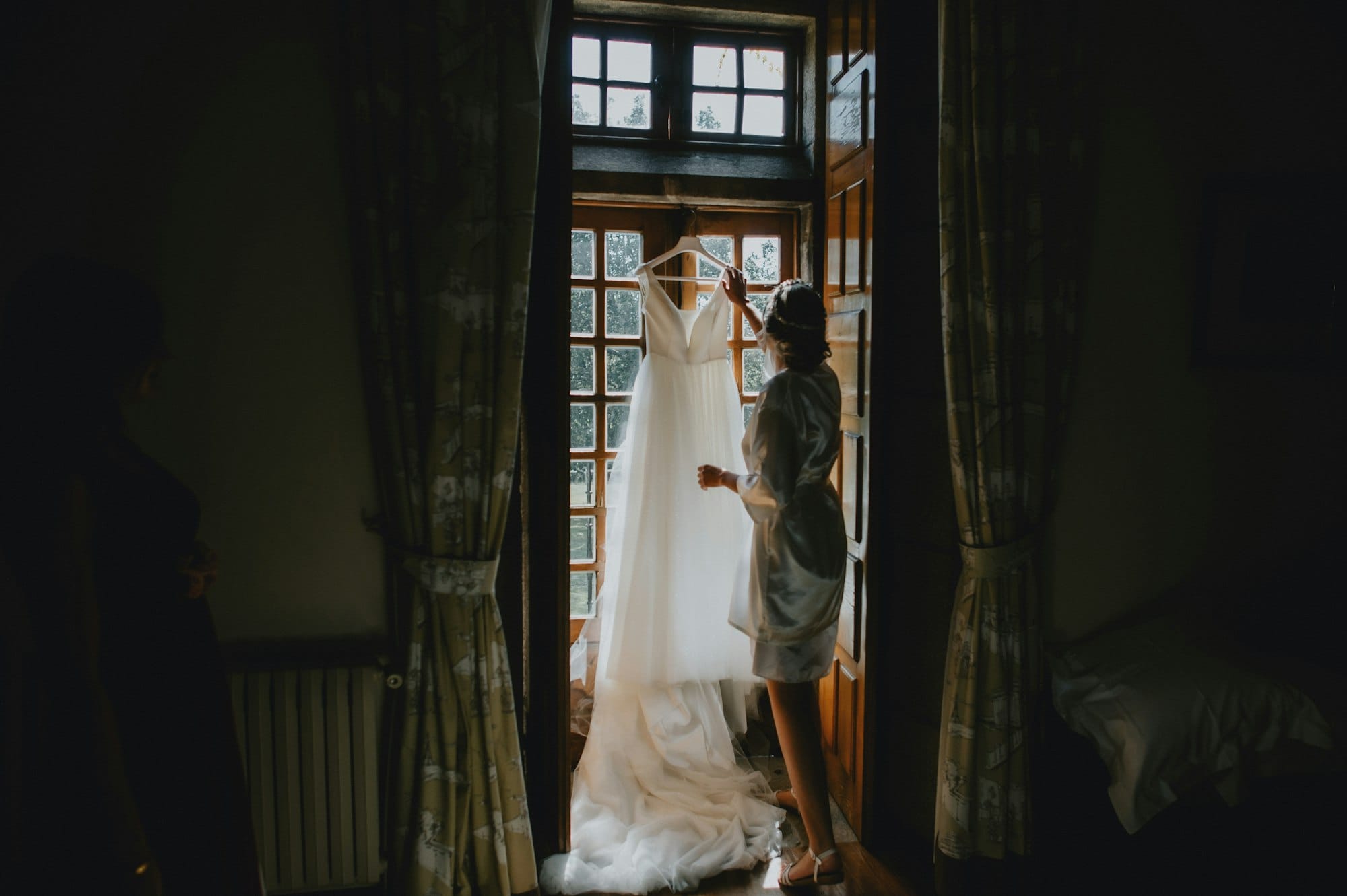
- Morning. Soft, indirect light through the agaves gives quiet getting-ready frames if the day’s logistics include a nearby preparation space.
- Late afternoon. The garden’s working window. Cantera walls hold the day’s heat and read warm against the plants. Sun rakes through the agaves at angles that compose the photograph for the camera.
- Sunset. The final stretch of light pulls long shadows across the courtyard. Couple portraits during this window are the strongest frames of the day at this venue.
- After dusk. The lit facade of Santo Domingo a few steps away becomes a possible background option for couple portraits if the day’s timeline allows the walk.
The practical version: a photographer who knows the garden knows when to walk and when to wait. The light here is generous, but it’s short. The day has to be timed against it, not improvised against it.
How David Josué works at the Jardín
At an architectural space like the Jardín Etnobotánico, the work begins before the wedding day. I scout the courtyard, read where the light lands at the hours that matter, learn the angles where the agaves and cantera frame the couple.
By the time I have a camera out, the choreography is already decided. Not yours — mine. You don’t get a shot list. You don’t pose. You don’t perform for the camera. Most people have spent their adult lives being told to look a certain way for photos, and the body locks the moment a lens points at it. My job is to undo that lock before the first frame.
The practical shape of how I work:
- Calm direction. No shot list, no choreography, no performing for the camera.
- Quiet preparation. I read the venue’s light and architecture before the day, not improvise on it.
- 25+ years. Photographing weddings in Mexico, Europe, and several other countries.
- Documental, Signature, and Bespoke collections. Pricing on request, sized to the day you actually want.
A jardin etnobotanico oaxaca wedding rewards the photographer who’s done the homework. The architecture is generous to a prepared camera.
Five years from now
Five years from now, you open a folder. Maybe it’s the anniversary morning. Maybe it’s a random Tuesday and you needed something to hold onto.
The folder works or it doesn’t.
If it works, the garden returns to you — the agaves backlit at six pm, the cantera walls warm with the day’s heat, your partner walking toward you across the stone, the lit Santo Domingo facade glowing behind the late dinner. You’re not looking at pretty pictures of a wedding. You’re standing in the day again.
The archive returns the moment. Not just pictures of it.
If it doesn’t work, the folder is a stranger’s wedding. The pictures are technically fine. They’re nicely lit. But the day doesn’t return. The album gets retired to a drawer.
A jardin etnobotanico oaxaca wedding gives a photographer architectural light at high elevation. The combination is rare. What the archive keeps from that combination depends entirely on how the day was timed and worked.