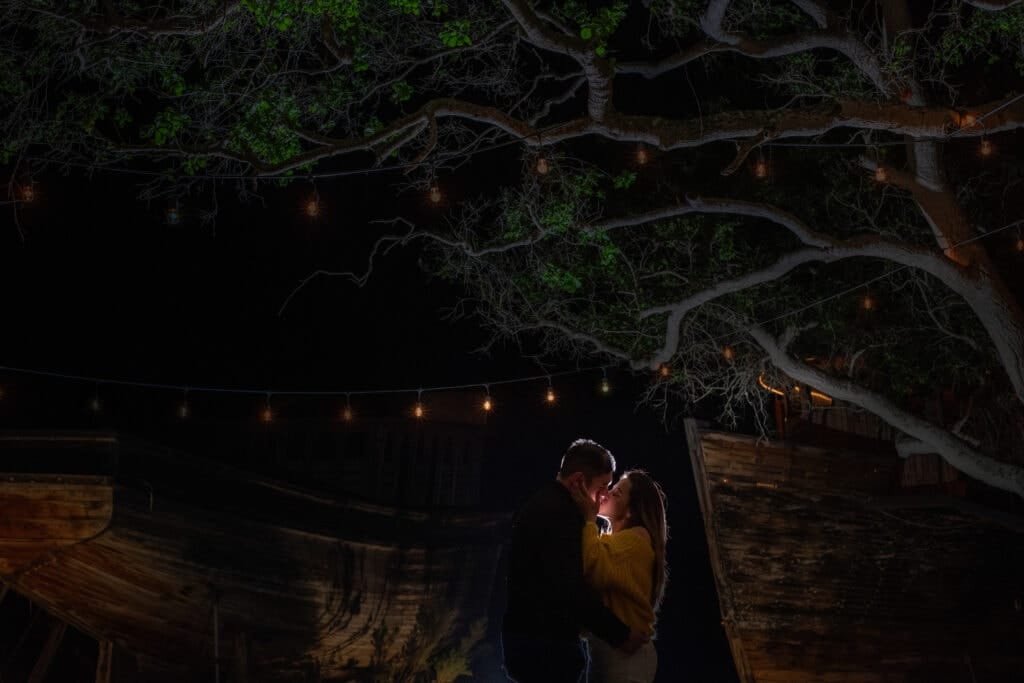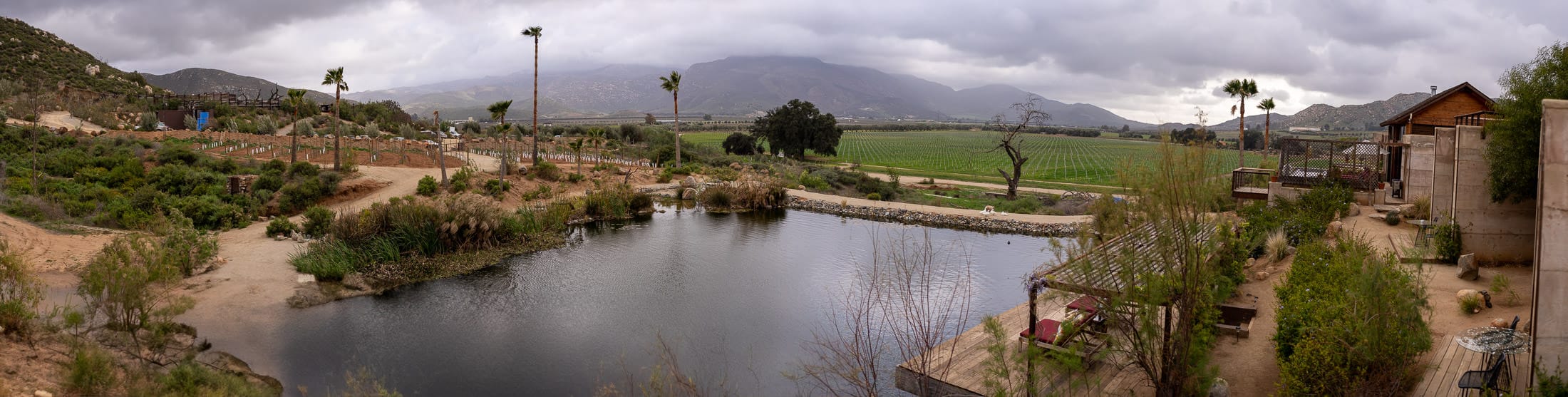
You’ve walked Banyan Tree Veya’s property and felt it — the concrete, the clay brick, Rojkind’s thirty villas sinking into the hillside like they grew there. It’s astonishing. And quietly, in the back of your mind, the question most couples don’t say out loud: will I disappear in my own wedding photos here?
You won’t. Not if the day is planned so the architecture holds you instead of swallowing you. Not if you get those forty minutes of late light — the hour when clay brick turns warm and the valley glows underneath Pictograma’s vaults. That part isn’t instinct. It’s timing, and a little patience — the same patience that makes an intimate wedding in the Valle de Guadalupe feel unhurried instead of staged.
I’ve been at Banyan Tree Veya since the property opened in July 2024 — villas, cava, hillside, every hour of every season. Long enough to know where the light lands at 6:47pm in March and where it lands at 5:12pm in November. This page is the shorthand of everything I’ve learned here, written for you — the bride deciding whether this is your place.
Looking for venue options? This page is specifically about Banyan Tree Veya. For the full comparison across Valle de Guadalupe, start with the Valle de Guadalupe wedding venues guide.
Banyan Tree Veya at a glance
- Location
- Valle de Guadalupe · 90 min drive south of San Diego
- Architect
- Rojkind Arquitectos · Modernist, 30 hillside villas
- Ceremony Spaces
- Wedding Terrace · Pictograma · Yoga Deck
- Best Light
- Golden Hour · 5:30–7:00 PM, spring & fall
- Portrait Time
- 40–50 minutes — the slow window
- Best Seasons
- April–June, Sept–Nov · perfect light & temperatures (August is busiest with the Vendimia harvest festival)
Banyan Tree Veya — the property, in plain terms
Before the photography conversation, the property itself. Banyan Tree Veya Valle de Guadalupe is the first standalone Banyan Tree Veya in the world — the dedicated wellbeing brand’s flagship property. A 30-villa wellbeing-and-wine resort on sixteen hillside acres at Camino Vecinal 179, Ejido El Porvenir, Valle de Guadalupe. Each villa has its own private plunge pool. Architecture by Michel Rojkind / Rojkind Arquitectos; interiors by smArq Arquitectura.
What that means on a wedding day:
- Three ceremony spaces on one property — Wedding Terrace, Pictograma cava, and Yoga Deck — so you choose by feel, not availability.
- Pictograma Winery on-site, focused on Grenache. The wine your guests drink is bottled where you got married.
- Veya Spa with a traditional temazcal, botanical garden, and seven culinary outlets for the days flanking the wedding.
- About 90 minutes drive south of San Diego, off Highway 3 through Ensenada.
If you’re searching to understand whether Banyan Tree Veya works as a wedding venue, the short answer: it’s purpose-built for the kind of guest experience that makes destination weddings worth the travel. The longer answer is everything below — what the photos require, how the day flows, where the light lands, and what it costs you in planning to do it well.
What a Day at Banyan Tree Actually Feels Like
Rojkind’s villas aren’t built on the hillside — they’re carved into it. You walk in and the earth holds you. The concrete is cool to the touch at 10am and warm by 4pm. The glass walls don’t separate you from the valley; they let it in. Every surface has its own hour.


This is what I’ve learned after a year of standing inside those surfaces at every hour:
- The clay brick is restless until 5:30pm. Then it turns warm amber and holds that glow for forty minutes. That’s when your portraits sit inside it like you were made there.
- The concrete shows its best face one hour before sunset. The light turns gradient on it — bronze at the top, ocher lower down. Against that wall you stop looking styled and start looking lived-in.
- The panoramic glass behaves differently depending on where the sun is. Early afternoon it flares. Late afternoon it mirrors the valley back at you, so you appear to be standing inside the landscape rather than beside it.
Every vault, every concrete edge, every glass angle has its own hour. The day at Banyan Tree Veya is about being in each of them at the minute they're most generous.
Pictograma — the Cava
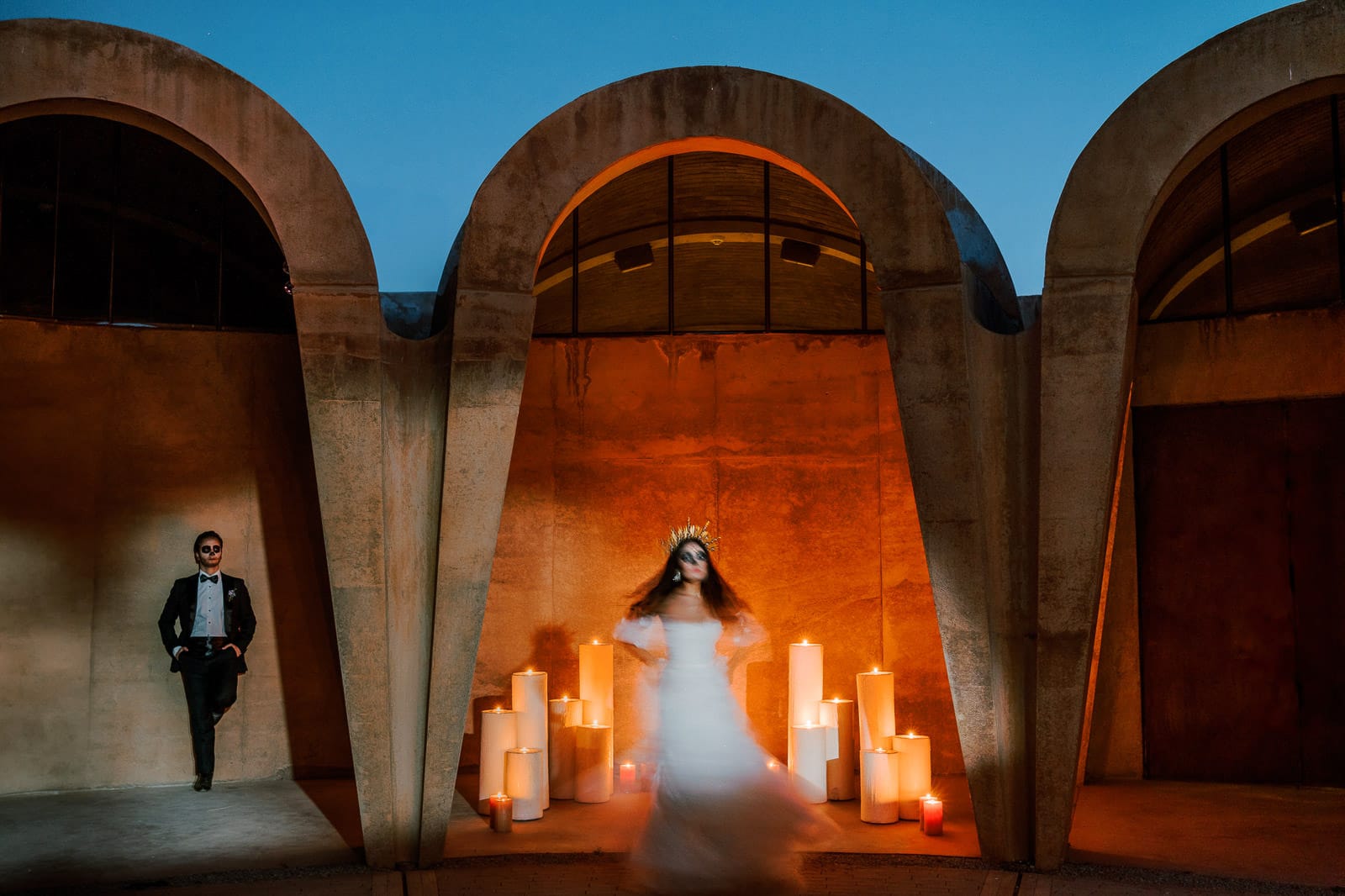
Rojkind’s architectural heart on the property: concave slabs arranged around a central patio, inspired by Franciscan forms. Clay brick. Handcrafted vaults. Indigenous murals. A cava that feels more like a chapel than a wine cellar.
When you stand there during the tour, the power hits you first. The hush second. Then the specific thing that nobody tells you — the space is already symmetrical. You don’t have to do anything to earn it. Walking the center aisle and stopping under the main vault is enough.
The vaults carry the picture for you. The murals add weight but don’t steal it. What the space asks of you is the smallest thing: stay in the middle, breathe, look at each other. The architecture does the rest.
The Tension Everyone Feels — Grand vs. Intimate
You chose Banyan Tree Veya partly because of the drama. You also want to be the clear subject of your own photos, not a small figure inside a large frame. That tension is real at every architectural venue — and at Banyan Tree it resolves across the day, not in any single frame.
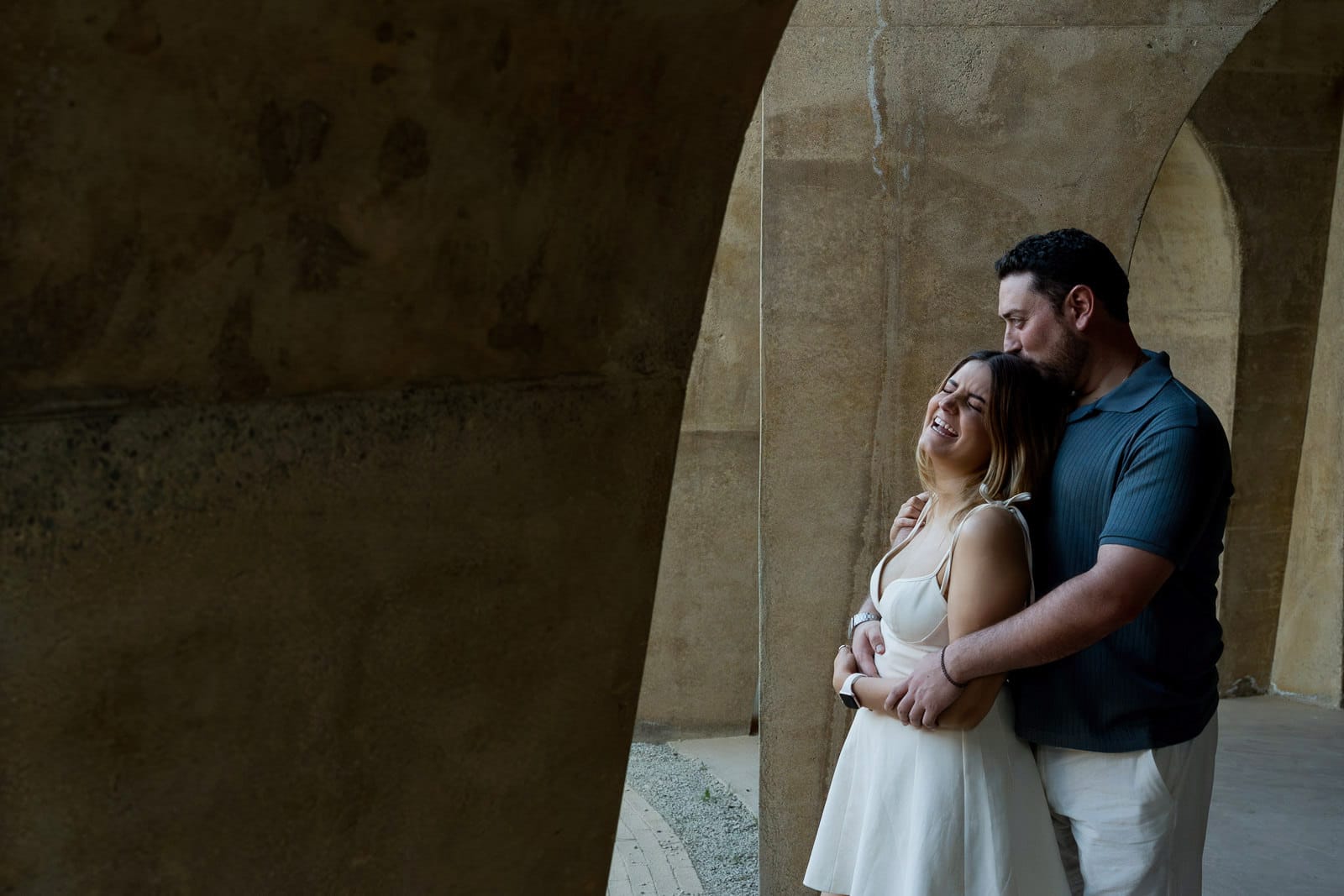
Tight during the vows: your faces, your breath. Wide during the first kiss: your celebration, the valley below. Then back to tight for the quiet portraits in the hour after — one of you on the villa terrace, the other half-hidden by the clay-brick vault. The gallery carries both scales because the day gives both scales. You don’t need to plan that yourself. It’s already baked into the rhythm of the property.
Your Three Ceremony Locations
Banyan Tree has three spaces where you can say your vows. Each one does something specific to the day. Pick by the feeling you want, not by which space looked prettiest on the tour.
The Wedding Terrace — the valley at your feet
Elevated, open, 360-degree view of the hillside below. Your guests sit facing you with the valley spread out behind; the light comes in low from the west in the afternoon.
What the day feels like here: spacious. You can hear wind across the vineyard. There’s nothing between you and the sky.
When it’s at its best: late afternoon into golden hour. The sun behind you, the valley lit up golden, nobody squinting.
The trade-off: fully exposed. On a hot day with a long ceremony, that matters. Shade is a different conversation.
Pictograma — inside the cava
Rojkind’s concave brick slabs around a central patio. Handcrafted vaults overhead. Indigenous murals on the walls.
What the day feels like here: held. The scale makes everyone quieter. Guests walk in and stop talking for a second.
When it’s at its best: any hour. The vaults filter the light into something soft and even, which is why this is also the weather-proof option if outdoors becomes impossible.
The trade-off: none, really — except that couples sometimes choose it for the “dramatic photos” reason and miss that the space’s real gift is how it hushes everyone.
The Yoga Deck — sunrise, if you can get your people there
Smaller, more intimate, panoramic. Soft morning light between roughly 6:30 and 8:00am depending on the season.
What the day feels like here: private. You’ve got maybe twenty guests max, the valley is quiet, and the light is forgiving in a way nothing else on the property is.
When it’s at its best: sunrise. That’s the whole offer. A 6:30am ceremony means breakfast after, a day of exploring Valle together, reception in the evening somewhere else on property or at a neighboring winery.
The trade-off: you have to convince your guests. Some will love it; some will resist. Most weddings here happen later in the day because of that.
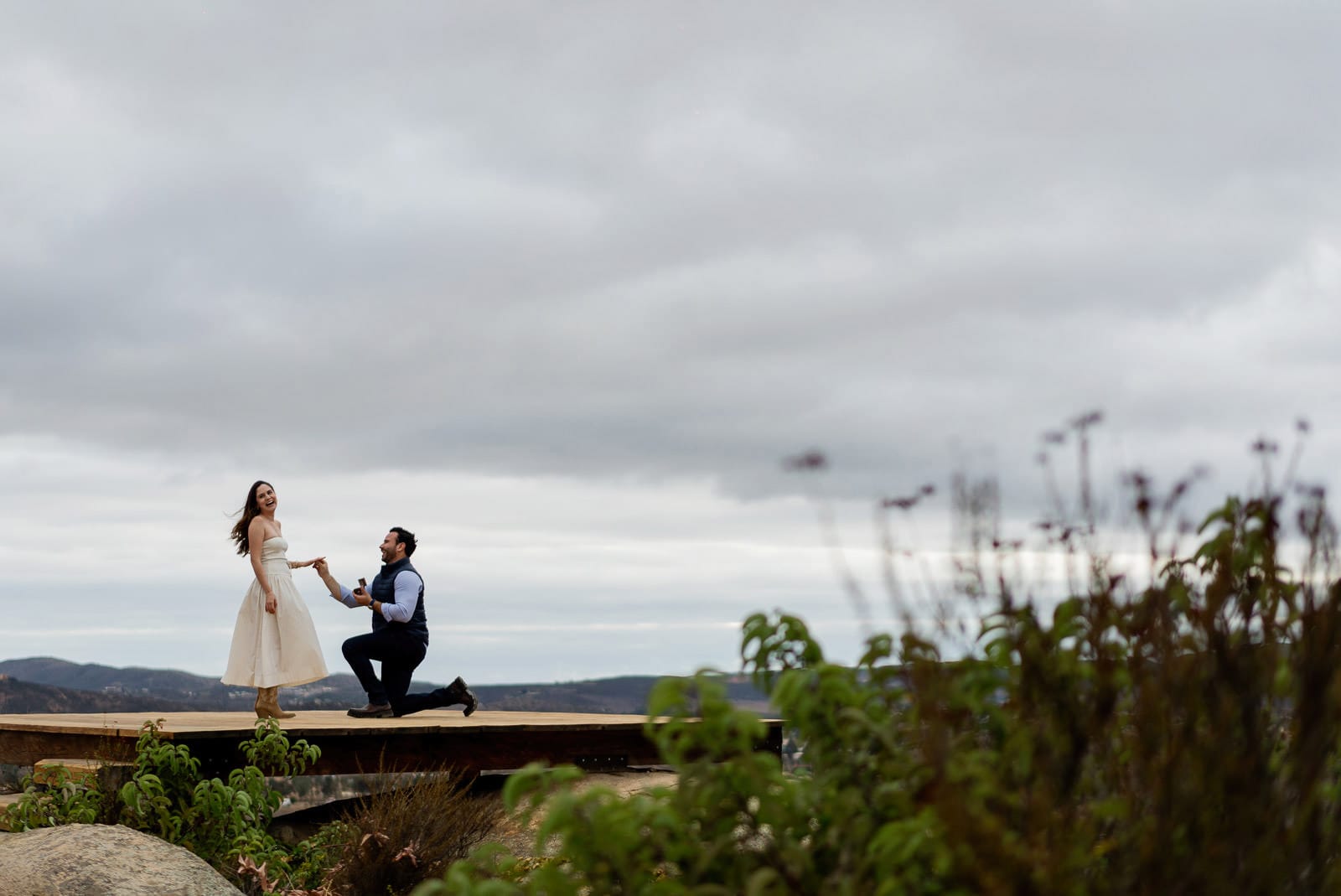
The Yoga Deck produces the softest, most transcendent images on the property — not because it’s better but because sunrise light is. See what golden hour looks like at other Valle venues for reference.
The Hour That Changes Everything
One thing about Banyan Tree worth naming out loud: the hour before sunset is doing the heavy lifting here. More than at any other Valle venue I’ve worked in.
That’s when the clay brick turns amber. When the concrete goes from grey to bronze. When the valley glows back at you through the panoramic glass. Before that hour, the architecture is beautiful. During that hour, it’s alive.
So if you’re picking a ceremony time, the one variable worth getting right is this: start 30 to 45 minutes before sunset. That puts your portraits inside the golden window right after the kiss, not after it’s already gone.
Light across the day
Morning (7–10am) — soft, diffused. Villa windows spill this light everywhere. Good for getting-ready moments; everyone looks rested.
Midday (11am–3pm) — bright, flat, hot on the concrete. The day’s least photogenic window. Use it for lunch with your people, not for portraits.
Late afternoon (4–5pm) — the slow warm-up. Angles soften, textures start to show, the property becomes itself again.
Golden hour (5–7pm spring/fall, shifted earlier winter, later summer) — the forty minutes the whole day has been waiting for.
Twilight (7–8pm spring/fall) — brief, cooler, deep blue over the architecture. The lights inside the villas start reading warm against it.
Banyan Tree's hillside position shifts sunset by almost two hours between summer and winter. The exact portrait spot moves 30–40 feet with it. That's the variable I'm tracking for you in the weeks before.

A rhythm that works
2:00pm — getting ready in the villa. Floor-to-ceiling windows do most of the work.
4:00pm — first look, if you’re doing one. Yoga Deck or hillside. Private, unhurried.
5:00pm — ceremony. Wedding Terrace or Pictograma, positioned so the light lands where it needs to during the kiss.
5:45pm — the forty golden minutes. Hillside vineyard, clay brick wall, infinity pool reflection. Protect this block on the timeline.
6:45pm — cocktail hour. Family formals in the last warm light, candid guest moments.
7:45pm — reception. Warm interior light, first dance, toasts. The day moves from architecture to emotion.
Winter: move everything 90 minutes earlier. Sunset lands closer to 5:45pm. Summer: 5:30pm ceremonies still give you golden hour. 30 minutes of cushion.
Across the seasons
Spring (April–June) — vineyards blooming, soft warm afternoons. The most forgiving weather of the year.
Summer (July–August) — longer days mean more timing flexibility. Heat is the trade-off. Shade between ceremony and portraits matters more.
Fall (September–November) — harvest season. The golden light gets somehow richer — the air itself seems to hold more of it.
Winter (December–February) — early sunsets, dormant vines, cooler color palette. Different beauty. Requires adjusting the whole day earlier.

More on seasons across Valle: best time of year to get married in Valle de Guadalupe.
How to Plan This Day Well — Three Things That Matter
Three things that, in my experience here, make the difference between a Banyan Tree day you rush through and one that actually lands. In order.
1. Have the photography conversation early
Not last. Not after the venue and the coordinator and the florist are locked. Banyan Tree’s architecture makes timing specific — the ceremony window for golden hour is narrow, the portrait locations shift by season, and a few decisions made early protect the entire day.
If I’m in the conversation before the timeline is finalized, I can say “5pm not 6:30 — here’s why” before it’s hard to change. If I’m the last vendor booked, we’ll still make beautiful images; we just won’t get the ones this specific venue makes possible.
The timeline is the hidden variable at Banyan Tree Veya. Get it right early and the whole day relaxes. Get it wrong and every other decision has to bend around it.
2. Walk the property together, two months out
I should be at Banyan Tree with you during your final venue visit, ideally 2–3 months before. At the same time of day as your ceremony — because light at 3pm looks nothing like light at 6pm, and I need the real thing.
What we’ll look at together:
- Where the sun actually is at ceremony time. Not “afternoon” — the specific angle.
- A handful of ceremony positioning options so you can pick the one that feels right, not just the one your coordinator has seen before.
- Portrait spots that work during your specific golden hour window — different in March than November.
- Indoor backups that preserve the same feeling if weather makes outdoors impossible.
- Access and timing limits at the resort so nothing gets awkward on the day.
It’s not a long visit. An hour or two, in the clothes you’ll probably be wearing, with coffee. Mostly we’re walking and pointing and talking.
3. Protect the forty minutes
After the ceremony, you get a window — call it forty to fifty minutes — when the light is doing the thing it only does here. Hillside vineyard rows, clay brick walls, the villa terraces, the pool reflecting the sky. That’s the block we’re protecting.
Couples occasionally feel guilty leaving their guests to cocktail hour alone. Don’t. Your guests are fine; they’re drinking Valle wine and watching the valley turn gold. What happens during those forty minutes is what you’ll frame on a wall twenty years from now.
During that window, I’m not directing you into poses. We’re walking the property; you’re talking to each other; I’m making frames. You’ll barely notice the camera. That part is on me.
Questions we’ll work through together
Some of what we’ll cover during the walkthrough — either with me or with whichever photographer you choose. These are the details that keep the day honest.
“Can we see a full gallery from a Banyan Tree Veya wedding?” Full galleries show how light was handled across an entire day — getting ready, ceremony, portraits, reception. That’s the real signal.
“Where do you like to stand during Pictograma ceremonies?” Symmetry, vault framing, the center aisle. There isn’t one right answer — but there should be a specific one.
“What’s the ceremony timing for the best light?” Golden hour, shifted by season. Sunset moves almost two hours between summer and winter here.
“How will you balance the architecture with the intimate moments?” A mix of tight frames (emotion), wide frames (celebration), and mid frames (you inside the building without being swallowed by it).
After the Wedding — a day-after session, if you want one
Some couples come back a day or two after the wedding for a relaxed session — sunrise at the Yoga Deck, late afternoon inside Pictograma, the villa terrace at golden hour. No ceremony pressure, no schedule. The images from these sessions are often the ones that end up framed in the house.
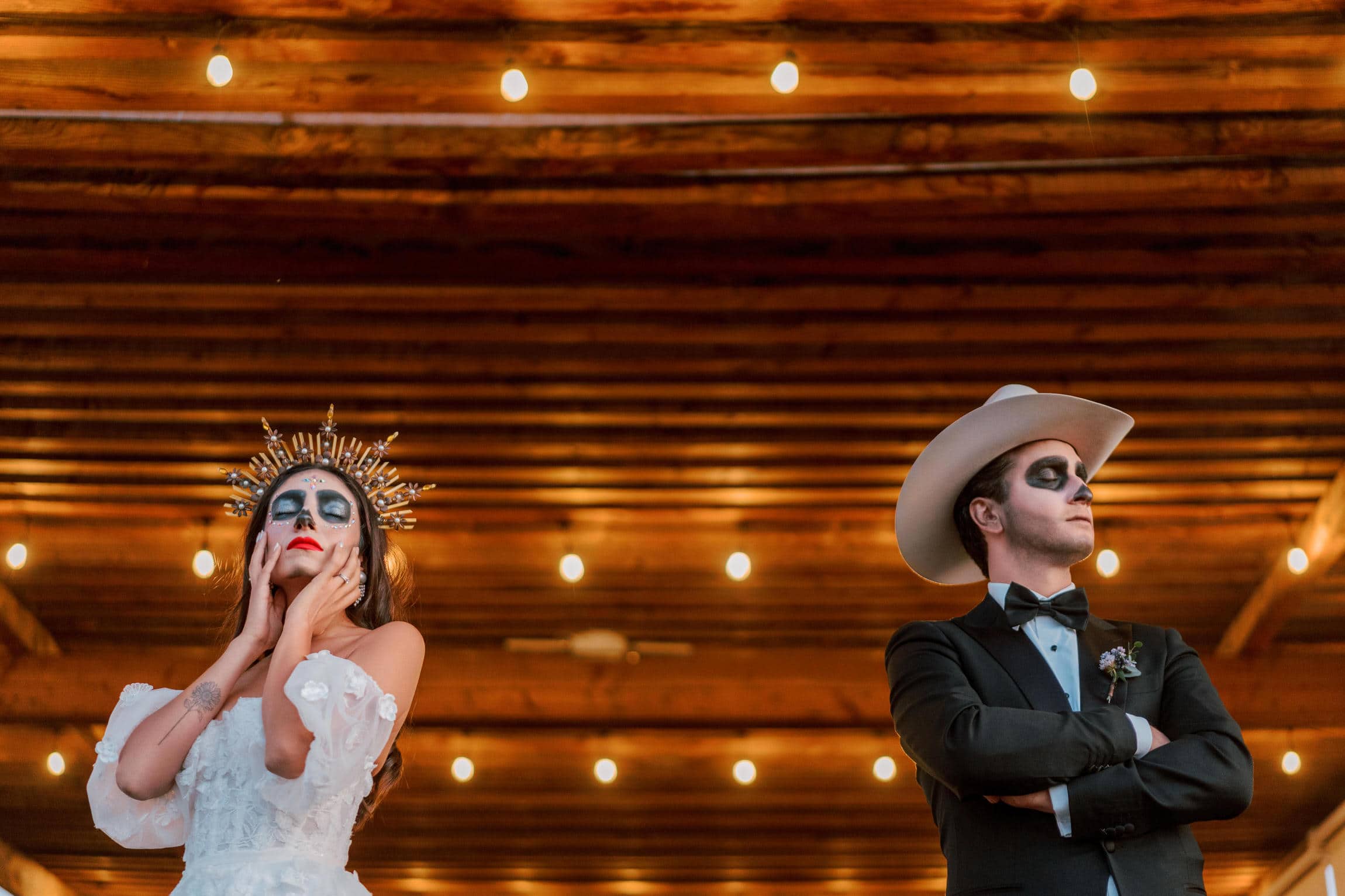
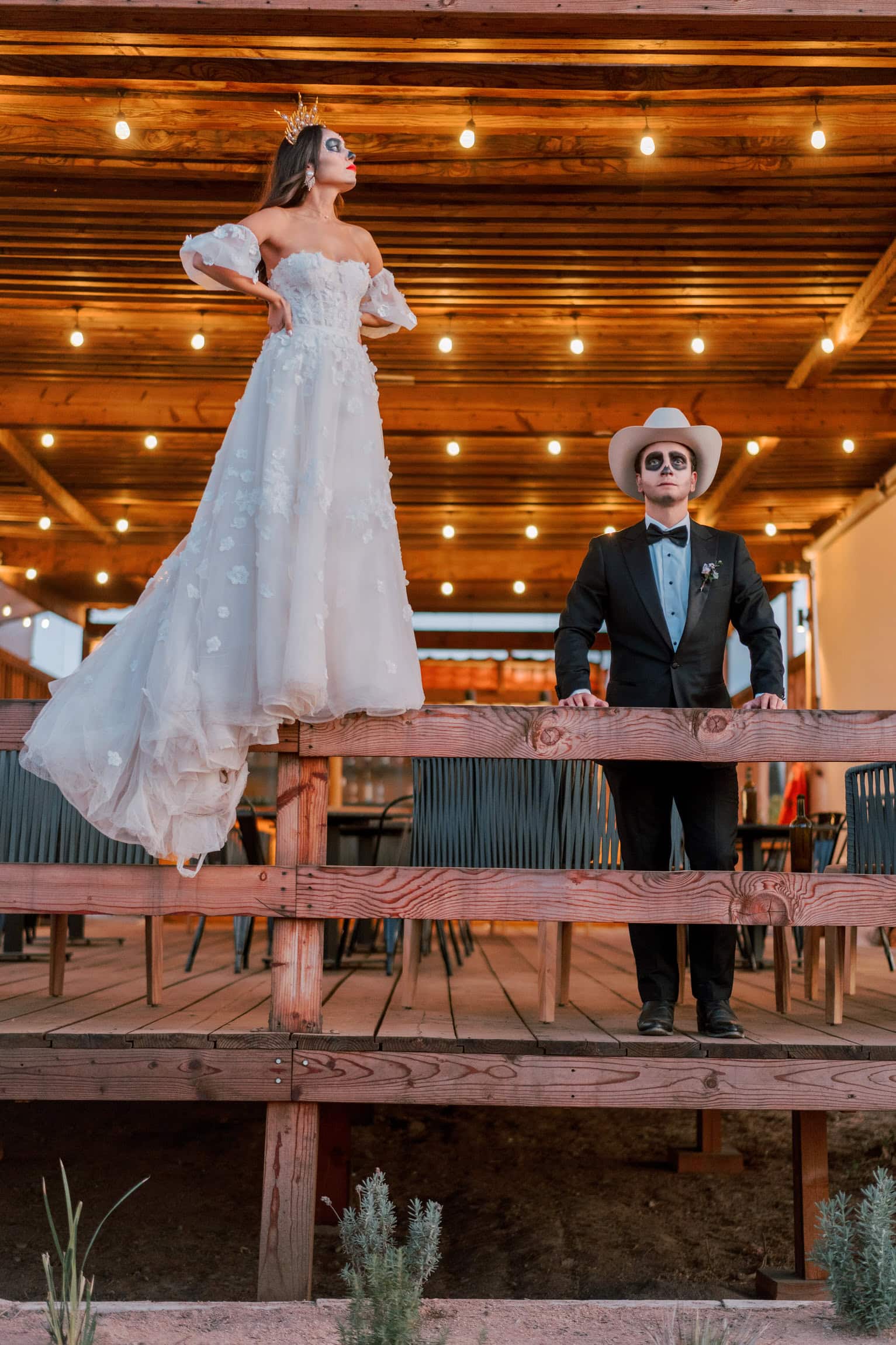
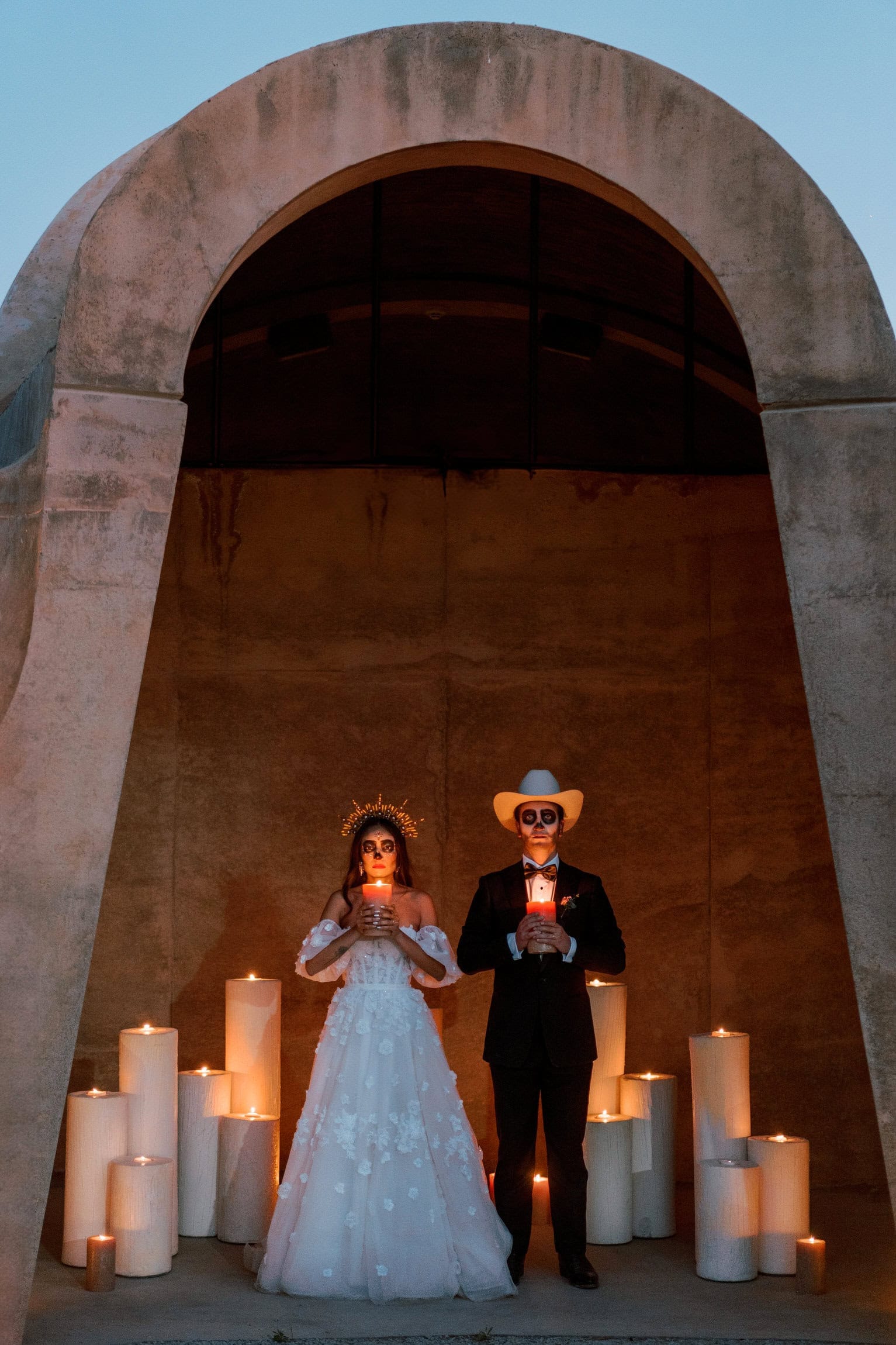
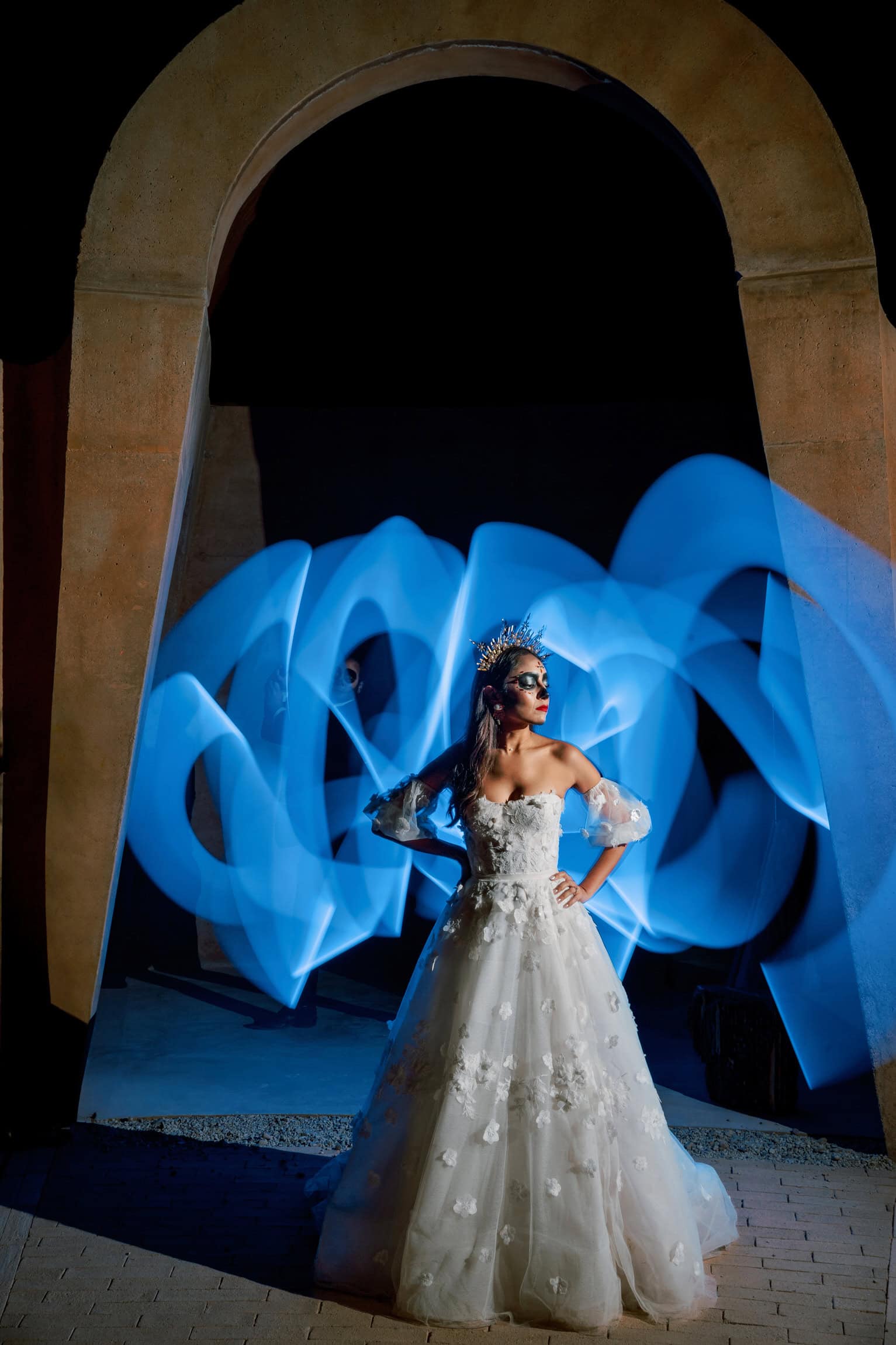
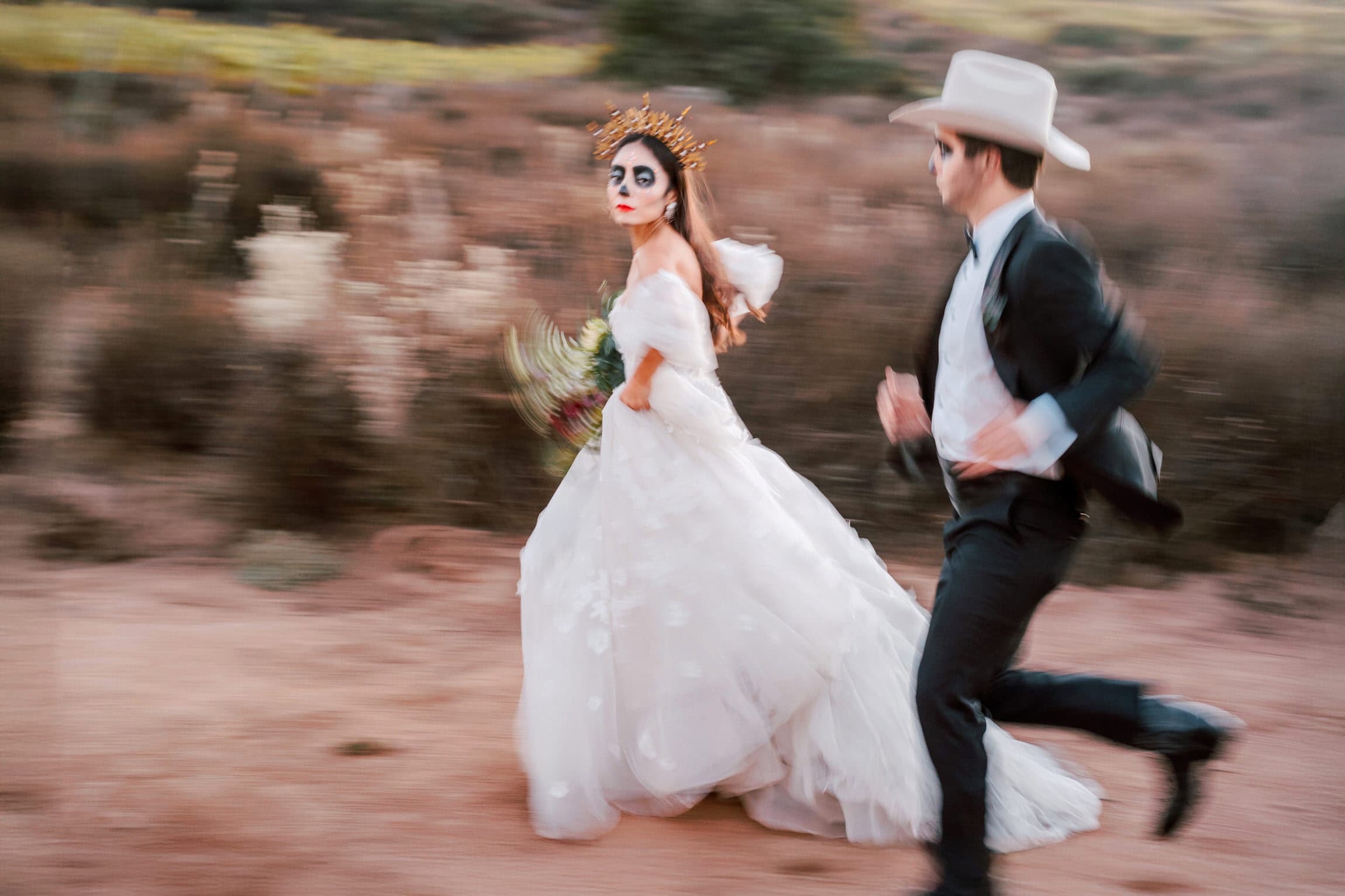
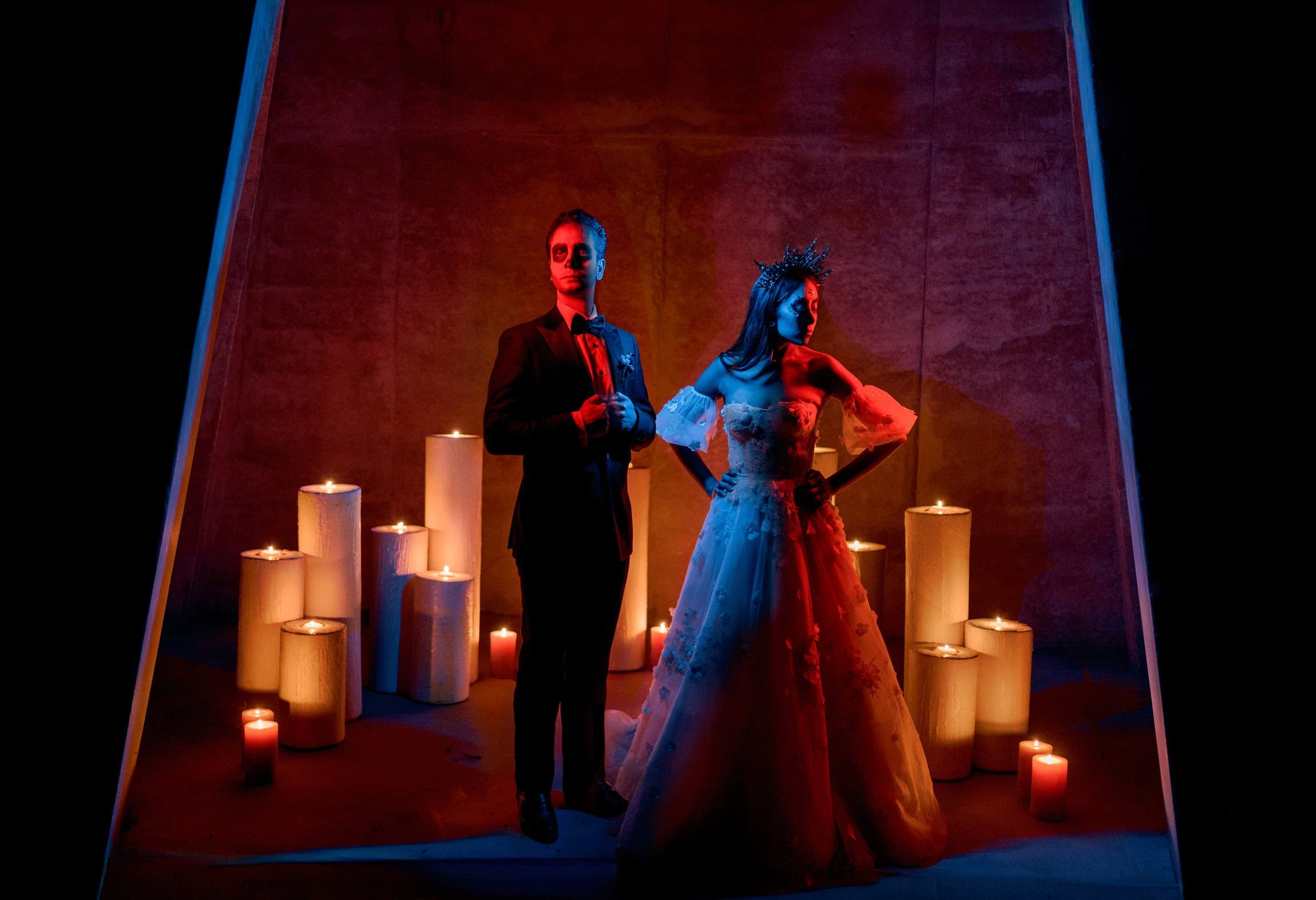
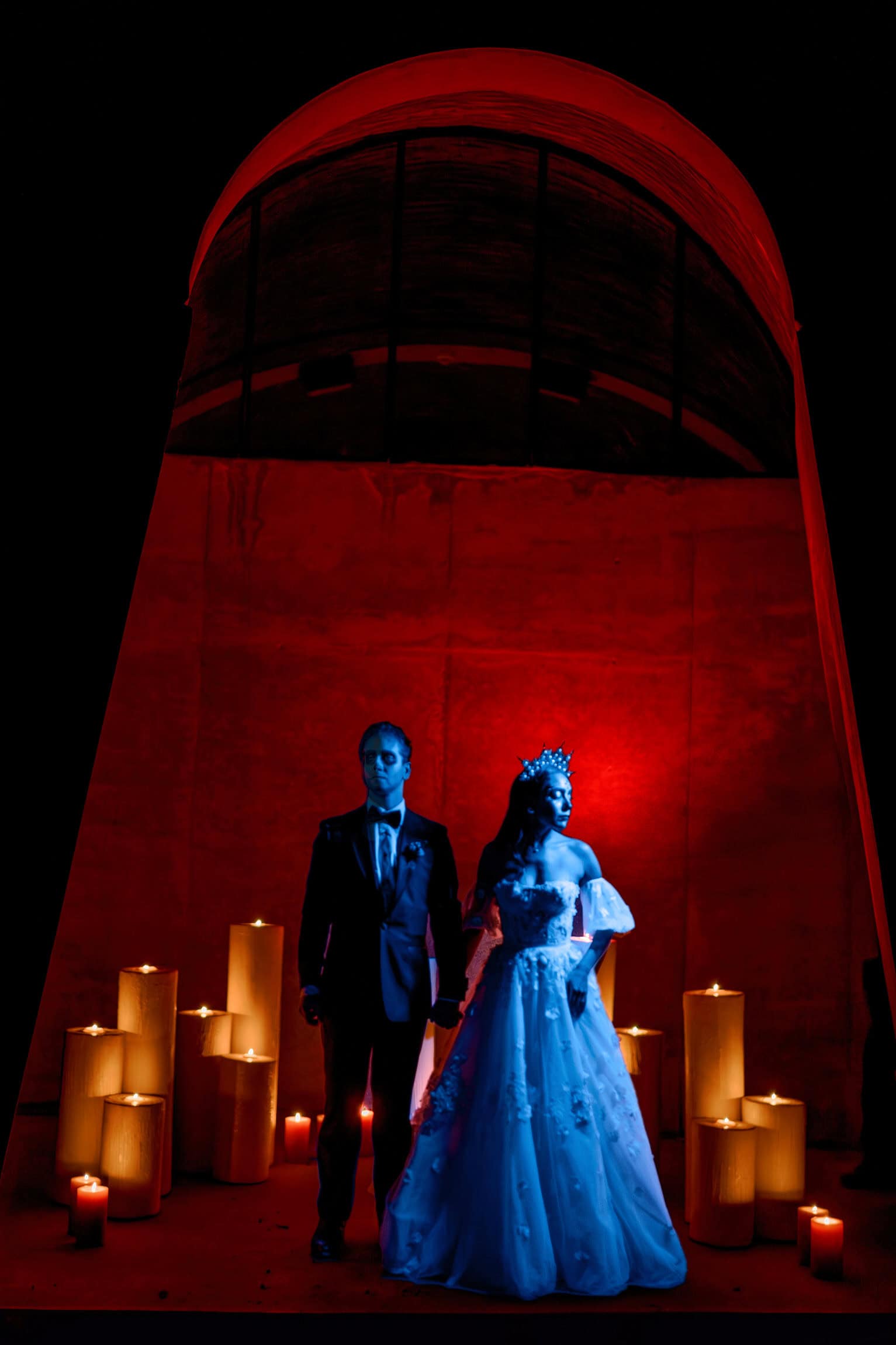
Catrinas-themed sessions work especially well at Pictograma — Día de Muertos tradition sitting inside Rojkind’s design. Takes a little resort coordination but produces editorial work worth the planning.
Questions Brides Ask About Banyan Tree Veya
What time should we schedule the ceremony?
Spring and fall: 5:00pm. That puts you inside golden hour for portraits right after the vows. Winter: 3:30pm — sunset lands around 5:45pm instead of 7:30pm.
How much time should we block for portraits?
Forty to fifty minutes, minimum. The property has multiple distinct spots — hillside vineyards, Pictograma, villa terraces, the pool area — and getting between them takes a few minutes each. Rush it and you end up with a thin gallery. Protect the block and you get the range.
Which ceremony location is right for us?
Depends on what you want the day to feel like. Wedding Terrace — spacious, valley spread out below you, ideal if you want landscape-heavy frames. Pictograma — held, hushed, weather-proof, the gift is how it quiets the room. Yoga Deck — sunrise only, intimate, soft morning light, small guest count. We’ll walk all three during the property visit and you’ll know which one fits.
Should we do a first look?
Both work. A first look at the Yoga Deck or a villa terrace buys you a private moment earlier in the day and relaxes the portrait timeline. Waiting for the aisle gives you a specific kind of emotional peak that’s hard to replicate. Pick based on what feels right to you, not on what a photographer (me or anyone else) prefers.
How does the architecture actually show up in photos?
Morning light turns the villas soft. Late afternoon turns the concrete bronze and the brick amber. The scale wants you placed centrally — inside a vault, framed by a terrace rail, against a clay-brick wall. When the architecture is being used as a frame rather than a stage, you end up in the middle of the picture instead of lost inside it.
What’s special about Pictograma?
The space is already symmetrical. You don’t have to do anything to earn it — walk the center aisle, stop under the main vault, that’s enough. Most couples who choose Pictograma say the silence hit them first. The photos take care of themselves.
When should we schedule the walkthrough?
Two to three months out, at the same time of day as your ceremony. Light at 3pm looks nothing like light at 6pm and the portrait spots shift 30–40 feet between summer and winter. Coffee, an hour or two on the property, we walk and point.
What if it rains?
Pictograma is fully weather-proof and still beautiful — my first backup for any outdoor ceremony. Villa terraces also work for intimate-scale ceremonies. Valle’s climate is mild enough that we rarely need backups outside December–February, but we always have one planned from the walkthrough.
Can we do a session the day after the wedding?
Yes, and these often become the favorite images of the whole trip. Sunrise at the Yoga Deck, Pictograma without guests, villa terrace at golden hour. No rush, no schedule, relaxed clothes. Catrinas-themed sessions at Pictograma are worth planning in advance — Día de Muertos tradition sitting inside Rojkind’s design makes editorial work that ends up framed in the house.
Is a Banyan Tree wedding right for us?
It depends on what you want. If a statement-architecture venue with modernist design matters to you, there’s nothing else like this in Valle. If you want a rustic vineyard feel, a hacienda romance, or a simpler timeline, other venues across Valle de Guadalupe will fit you better. Banyan Tree is for the couple who already knows the building itself is part of what they’re promising each other.
Let’s Walk the Property Together
Decades from now, you’ll want to look at your Banyan Tree photos and feel the day again — the weight of Rojkind’s clay brick against your shoulder at golden hour, the sound of the valley below Pictograma, the way the light hit you during your vows. A venue this architectural deserves images that keep you at the center. That’s the whole job.
If you’re considering Banyan Tree Veya and you want a photographer who’s been learning this property since it opened, let’s walk it together. No pressure. Tómate el tiempo — estas decisiones se sienten, no se calculan. De Jota, a tus órdenes.