Banyan Tree Veya — a photographer’s read on the property


Banyan Tree Veya is a boutique resort property in the wine country of the Valle area — resort architecture, vine-adjacent grounds, rolling landscape, and a warm afternoon light that wraps the property during the working hour. Couples find this article through searches like “valle” when researching luxury wedding venues in the region.
This article isn’t a venue directory. I’m not the planner. What I can tell you, as a photographer whose home base is the wine region and who has worked across these wineries for 25+ years, is what the property gives a camera and how the day reads across the working hour.
The orientation, briefly:
- Location. Wine country near Ensenada in the Valle area.
- Character. Boutique resort with curated architecture on vine-adjacent grounds.
- Photographer’s read. Resort architecture and the wine-region horizon are the photographic spine.
- Strong fit for. Couples who want resort hospitality with the area’s landscape as the photographic context.
What Banyan Tree Veya gives a camera
A wedding at this property in the wine region photographs differently from a working winery or a styled venue because the resort architecture is curated and the landscape view is panoramic. The camera leans on both the lines and the land.
The through-line, in plain terms:
- Resort architecture. Provides interior counterpoint to the open landscape. The geometry shifts across the day from vine green to architectural surface.
- Vine-adjacent grounds. The wider regional context wraps the property; the working vines of neighboring wineries read in wide frames.
- Rolling wine-region horizon. Behind the property; wide frames carry the land as anchor.
- Warm afternoon light. Against the dry hills, the late air softens contrast and wraps the bodies cleanly during the working hour.
The practical version: a wedding at this Valle resort rewards couples who want curated architecture paired with the working wine-country landscape in every frame of the archive that returns the day years later.
How a Banyan Tree Veya wedding day photographs
A wedding day in the wine region at this resort uses both the architecture and the surrounding landscape as the through-line. The rhythm follows the typical wine-country wedding pattern, with the curated resort and the rolling landscape providing the visual context throughout.
The photographable rhythm, in rough order:
- Morning. Soft indirect light for getting-ready frames in the resort suites. The morning regional light reads quiet and warm before the day fully arrives.
- Ceremony. Verify policies and exact location with the venue. Outdoor settings against the landscape are typical, with the rolling horizon behind the couple.
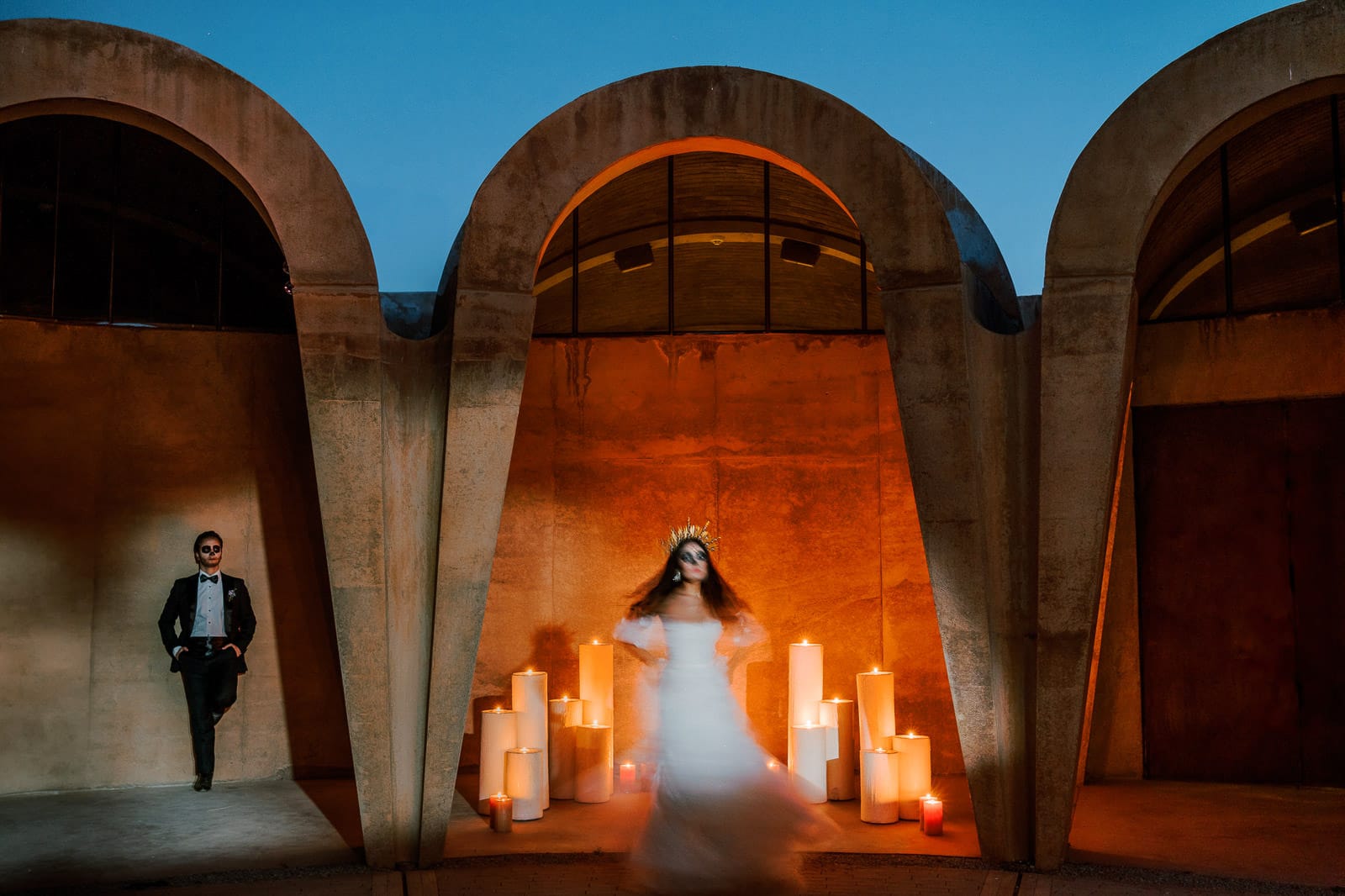
- Couple portraits at golden hour. Resort architecture combined with the rolling regional landscape. Multiple working backdrops within walking distance of the ceremony site.
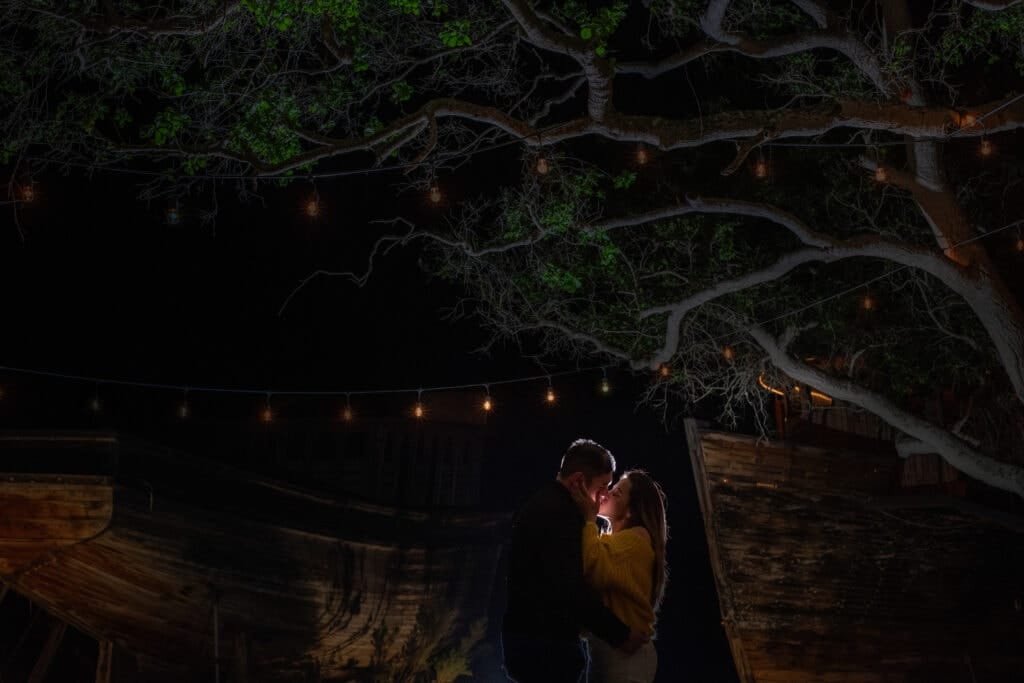
- After dusk. Resort lighting carries the reception against the dark vineyard. String lights, candles, and the silhouette of working vines beyond the lit space.
The practical version: a wedding here in the Valle works for couples who want curated resort hospitality with the wine country in every frame.
How David Josué works at wine-region resort venues
Wine-region resort venues photograph differently from working wineries or styled studios. The architecture sits inside the open landscape, the camera works the architectural surfaces alongside the rolling vines, and the day moves between interior and exterior. Working a Valle resort wedding means reading those conditions carefully.
Before any wine-region resort shoot, I scout the property. I read where the sun lands during the working hour, which architectural surfaces frame cleanly, where the wind picks up across the vine-adjacent grounds. None of that work is visible to you on the day.
By the time I have a camera out, the choreography is already decided. Not yours — mine. You don’t get a shot list. You don’t pose. You don’t perform for the camera. Most people have spent their adult lives being told to look a certain way for photos, and the body locks the moment a lens points at it. My job is to undo that lock before I make a single frame.
The practical shape of how I work:
- Calm direction. No shot list, no choreography, no performing for the camera.
- Quiet preparation. I read the property’s architecture, light, and landscape before the day.
- 25+ years. Photographing weddings in Mexico, Europe, and several other countries.
- Documental, Signature, and Bespoke collections. Pricing on request, sized to the day you actually want.
A wine-region resort rewards a photographer who reads both the architecture and the landscape carefully.
Five years from now
Five years from now, you open a folder. Maybe it’s the anniversary morning. Maybe it’s a random Tuesday and you needed something to hold onto from the wedding weekend in the Valle.
The folder works or it doesn’t.
If it works, the day returns to you — resort architecture at dusk, the rolling wine country behind your portraits, your partner across the lit table under string lights, the dark vineyards quiet beyond the property. You’re not looking at pretty pictures of a wedding. You’re standing in the day again.
The archive returns the moment. Not just pictures of it.
If it doesn’t work, the folder is a stranger’s wedding. The pictures are technically fine. They’re nicely lit. But the day doesn’t return.
A wine-region resort wedding gives a photographer curated architecture, the wider regional landscape, and warm afternoon light. What the archive keeps depends on how the camera worked the property’s specific character through the working hour and into the dark.